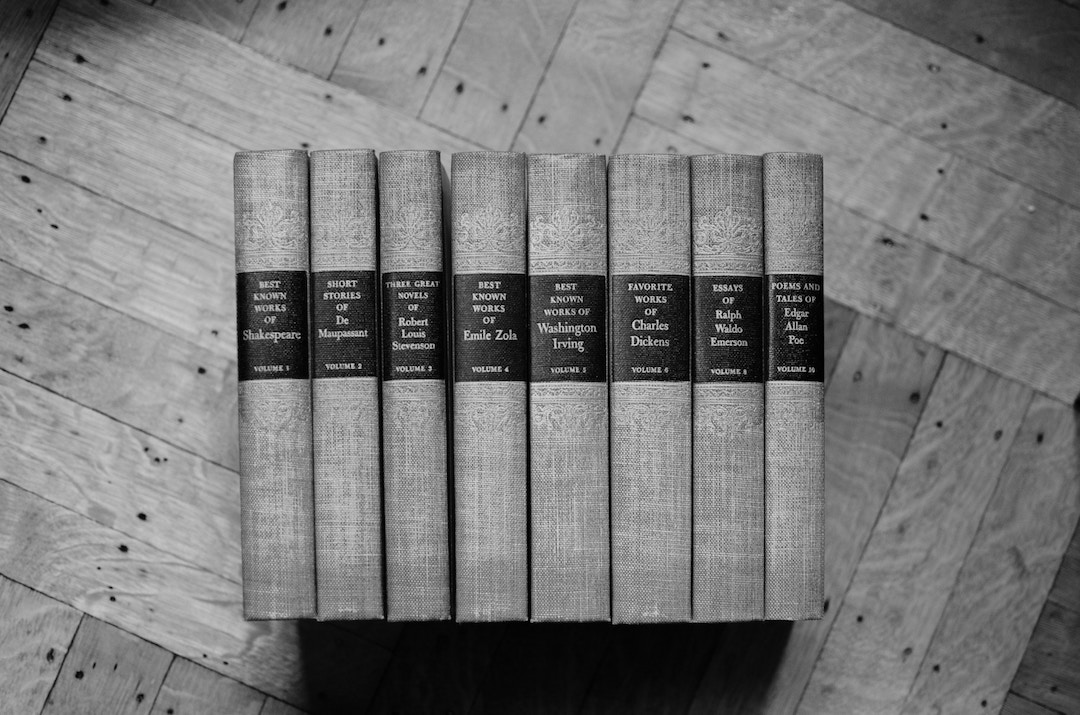
Can you learn to be a better public speaker by reading books?
The short answer is yes.
As long as you take action on what you learn.
Public speaking is not a passive skill. It requires you to stand up and test out the ideas you learn. However, if you are willing to practice, then what you learn as a result of reading public speaking books can help you dramatically.
Why Read Books on Public Speaking?
Nothing will replace the act of standing up and speaking to get better at presentations and public speaking. That’s just the reality.
If you want to do a TED talk, book more speaking gigs, become a more passionate presenter, or simply create a more memorable presentation, then you must learn as you go. There is no other way to do it.
However, learning a new skill or technique from someone who has years of experience in the art of public speaking is a great way to shortcut your learning. The good news is that there is an abundance of public speaking books available to help you.
There are literally hundreds of books on public speaking in print today. From 100-year-old books on eloquence to guides to debating, storytelling, and winning speech contests, there is an overwhelming amount of choice.
The bad news is that most of the books on public speaking are a waste of time to read.
Not All Public Speaking Books Are Worth Reading
Over the past 14+ years as a speaker, after two TEDx talks and 100+ books read on the craft, I’ve learned that most public speaking books repeat the same four or five ideas.
Many are far too long. Others repeat simple advice you can learn for free online in an afternoon. A handful rise above the noise.
When I reviewed which public speaking books had actually been useful, the list was small. For this updated 2026 edition, I’ve gone back through my bookshelf and added two more titles that have earned their place.
If you are an aspiring public speaker, or you are starting to grow into a professional speaker, here are the seven public speaking books that have helped me the most.
1) How to Develop Self-Confidence and Influence People by Public Speaking – Dale Carnegie
This book is the modernized version of Dale Carnegie’s early work Public Speaking and Influencing Men in Business, first published in 1937.
It contains the practical advice Carnegie learned from teaching public speaking courses for over a decade. In his lifetime, it is estimated that Dale Carnegie critiqued over 150,000 speeches from his students.
Carnegie eventually rose to fame as the author of How To Win Friends and Influence People, but this lesser-known title is a treasure trove of tips for aspiring public speakers.
While some of the examples and stories feel antiquated, the lessons of effective speaking still hold. Carnegie uses examples from speakers like Abraham Lincoln to demonstrate how to impact an audience. His suggestions on platform power, holding attention, and making your meaning clear are as relevant now as they were 80 years ago.
Carnegie’s best advice is also the simplest: don’t put on an act when in front of an audience.
The more you share your genuine personality with an audience, the greater your chances of connecting with the people you want to influence. If you want a good book on the basic how-to’s of being a better public speaker, start with Dale Carnegie. Read one chapter, then go deliver a five-minute talk at your next team meeting and apply one thing from it.
2) TED Talks – Chris Anderson
Chris Anderson is the owner and curator of TED, the annual conference bringing together the best ideas in Technology, Entertainment, and Design.
If you are an aspiring speaker, consider delivering a TEDx talk at some stage. (I’ve done two, and I still think about the lessons from them years later.)
Anderson’s book is part story about the history and growth of TED, part technical guide to how the best TED speakers actually make an impact. It is probably the most technical guide I’ve read on speaking in the last ten years, and it has some real gems that will move your skills forward.
Anderson’s concept of the Throughline is the single most useful tool I’ve borrowed from this book.
The Throughline is the one sentence that captures the heart of your talk. If you can’t write it in a sentence, you aren’t ready to speak.
Another nice bonus of TED Talks as a guide is that you can watch every example on YouTube as you read (whether you’re studying on your couch or on a flight). Before you write your next talk, write the Throughline on an index card. If it doesn’t fit on the card, cut it until it does.
3) Resonate – Nancy Duarte
This is one of the two new additions for 2026, and it is long overdue on this list.
Nancy Duarte is the founder of Duarte Design, the firm behind Al Gore’s An Inconvenient Truth presentation. In Resonate, she does something most public speaking books don’t even attempt: she breaks down the architecture of a great talk on a beat-by-beat level.
Duarte’s core idea is that every great speech moves back and forth between “what is” and “what could be”. The speaker opens by describing the world as it is, paints a picture of what could be, and pulls the audience forward between those two poles until the ending call to action.
Once you see this pattern, you cannot unsee it in any great talk.
She illustrates the framework with close readings of speeches by Martin Luther King Jr, Steve Jobs, and others, showing the exact sentences where the shifts happen. For a visual thinker, this book is gold. Next time you write a talk, map each paragraph as either “what is” or “what could be” and see if your speech is actually moving.
4) World Class Speaking – Craig Valentine
Any Toastmaster who follows the International Speech Contest knows about Craig Valentine’s 1999 World Championship-winning speech.
Valentine is one of the most insightful public speaking coaches working today. He’s also a master storyteller, which is the reason I keep going back to this book.
World Class Speaking is split in two. The first half is a how-to guide for building compelling stories and engaging your audience. The second half is about the business of speaking: how to market yourself and grow your speaking income.
Public speaking in 2026 is no longer only about standing on a stage. Everything we do on Zoom, Teams, webinars, and live social media broadcasts is a form of public speaking. Valentine addresses both sides of that shift well.
If you want the basics of good speech mechanics and a how-to guide for growing your speaking brand, Craig Valentine is the wisdom you need. Pick one story from your life, run it through his story structure, and tell it at your next meeting or toast.
(If you want to go deeper on what world-class speakers actually do differently, I’ve broken down every World Championship winner from the last 25 years here: 16 Lessons from 16 World Championship of Public Speaking Winners (1999–2014) and 11 Lessons from 11 World Championship of Public Speaking Winners (2015–2025).)
5) Steal The Show – Michael Port
One of the most effective ways to improve your communication skills is to study the skills adjacent to public speaking.
Improv, acting, singing, dancing, stand-up comedy, storytelling, poetry reading. All of it will make you a better speaker. If you want to understand how acting and public speaking skills converge, Michael Port’s Steal The Show does an excellent job of explaining.
Be warned: Michael Port is a showman and unashamed in promoting his own brand. His communication skills and ideas are sound, though, and his breakdown of the different types of speaking (keynote, panel, sales pitch, toast) is very useful.
The most valuable idea in the book is to take risks as a speaker.
If you stick to one type of speech, or you refuse to try new approaches, you cannot expand your skill. Pick one type of speaking you’ve been avoiding (a toast, a panel, a live Q&A) and put yourself in the room within the next 30 days.
6) Presence – Amy Cuddy
The second new addition for 2026, and the one I wish I had read in my twenties.
Amy Cuddy is a social psychologist at Harvard Business School. Her 2012 TED talk Your body language may shape who you are is one of the most-viewed TED talks of all time. Presence is the longer-form version of that talk, and it’s the best book I’ve read on the inner game of speaking.
Most public speaking books are about what the audience sees. Cuddy writes about what you feel before you walk on stage, and how to change it in your body rather than in your head.
She introduces the idea of “power posing” (a two-minute posture adjustment before a high-pressure moment), but the deeper value of the book is her framework for bringing your full self into the room. If you are someone who has the ideas and the preparation but still freezes on stage, this is the book that will help.
Try it: next time you have a pitch, a podcast recording, or a talk (even a Zoom call that matters), spend two minutes in a strong posture beforehand. Notice the difference when you start speaking.
7) Confessions of a Public Speaker – Scott Berkun
I include Berkun’s book because it’s the one title on this list that tells you what being a working speaker is actually like.
Scott Berkun is not a household name, but he spent years on the road delivering talks and lectures to small-to-medium-sized audiences. In Confessions of a Public Speaker, he shares honest, real-world observations on what makes a speaker relatable, engaging, and memorable.
He also has strong ideas about managing your lifestyle as a speaker. If you want to make a living as a speaker, trainer, or any other stage professional, there are certain realities you must face (travel fatigue, bad rooms, audiences who don’t want to be there).
If you want a real-world guide to being a paid speaker and how to make a genuine impact, Confessions of a Public Speaker is an excellent read. Before you book your first paid gig, read chapter 2 and write down which of his warnings you most need to prepare for.
Which Public Speaking Book Should You Start With?
Of course, there are hundreds of titles on public speaking, and I could list many more that gave me useful ideas. However, I believe these seven public speaking books will give you a well-rounded perspective on what you need to get started and grow as a public speaker.
If you are brand new, start with Carnegie. If you have a big talk coming up soon, read Anderson and Duarte back to back. If you know the ideas but still freeze on stage, read Cuddy. If you want to make a living at it, read Valentine and Berkun.
Before you consider hiring a public speaking coach, take some time to learn the basics and get some stage time yourself. Simply learning these ideas and testing them out on real people will give you a huge advantage as a presenter.
The art of public speaking takes years to master. Learning from those who have already honed their craft is an excellent way to speed up your progress. Pick one book from this list, read it this month, and apply one idea from it before you finish.
Speaker Skills is dedicated to real-world public speaking skills to grow your influence and impact. Everything we share on this site is tested and used on stage by us.
Leave a Reply